Horseman Scientist
Learn to see the horse in front of you

What does the horse need right now?
Horseman Scientist is a one-day clinic built around observation, cause and effect, and decision-making.
Instead of starting with a fixed lesson plan and asking the horse to fit it, we start with the horse in front of us. We look at what’s actually happening, figure out what matters in that moment, and build the plan from there.
What we observe is what shapes our immediate goals. Horses change moment to moment, and a horseman who can only run one script falls apart the second the horse needs something different.
The skill we’re building this clinic is the ability to adjust — to read what’s in front of you and know what it needs right now, using a process anyone can learn and repeat.
The horse is our case study
For September 12, we’re looking for a feral or minimally handled horse — one where approaching, catching, or haltering is still a genuine challenge.
Starting there matters. Early in the process, there aren’t a hundred learned answers already standing between us and the horse.
We’ll observe the horse, the handler, and the environment before we decide anything. We’ll talk through the patterns we’re seeing and what we think they mean, then use that to shape an appropriate goal for the session.
Then we test it. The horse’s response gives us new information — and sometimes that information tells us to change the goal. That’s the process. That’s horsemanship.
What you’ll work on
- Observation before action
- Cause and effect
- Pressure and release
- The horse’s nervous system and down-regulation
- Patterns and predictability
- Environment
- Timing
- Human energy and intention
- Angles, path and direction
- How a goal gets chosen — and when it needs to change
- Building a working approach from the horse in front of you
Some of this may already be familiar. This clinic breaks it down further — why it works, when it works, what changes the outcome, and what the horse is telling us about the choices we’re making.
Your Horseman Scientist notebook
Every participant receives a notebook to use throughout the clinic.
It’s built around understanding behavior and how horses learn, and it will aid your development as a horseman scientist long after the clinic ends.
The prompts ask you to look: What did you observe? What changed, and what happened right before it? What did the human do, and what did the horse do? What pattern is forming? What would you try next — and why?
You may not land on an answer during the clinic, and that’s fine. Learning to gather information before jumping to a conclusion is the point. This isn’t about memorizing Monica’s answer — it’s about building your own ability to see, reason, test, adjust, and learn from the horse in front of you. That’s something to carry to every horse you meet after this one.
Could your horse be our case study?
We’re looking for the horse for September 12.
The ideal candidate is feral or minimally handled, still difficult to approach, catch, or halter, and genuinely uncertain about human interaction. A horse at this starting point lets us study the earliest decisions in the process.
There’s no need for a predetermined training goal going in — that’s part of the point. We’ll build the goal from what we observe on clinic day.
If you own, foster, care for, or know of a horse on California’s Central Coast who might fit, email us at info@unitedmustangsofamerica.com.
Horse participation depends on suitability, safety, transportation, and arrangements with the horse’s owner or caretaker. An inquiry doesn’t guarantee selection.
Paris
We already have a remarkable horse available to teach us: Paris.
Paris came from a hoarding situation. She arrived with a halter stuck on her, a broken lead rope swinging from it, and a deep uncertainty about people — even accepting food from a person’s hand was something she had to learn.
Over the past year, she’s learned a great deal, and that’s what makes her interesting now. With Paris, we get to study both the horse in front of us today and the trail of cause and effect that brought her here. She still has questions and sensitivities, and she still gives us plenty to observe.
Whichever horse joins us September 12, this will be a groundwork demonstration — not a canned one. We’ll meet the horse we have, observe, decide what matters, and begin.
“How did they know to do that?”
That’s what we’re opening up.
Who this clinic is for
This clinic is for anyone who wants to understand horses more deeply — early in the journey, years into owning horses, or already training and wondering why something works beautifully with one horse and falls apart with another.
No need to know Monica’s terminology or teaching system beforehand. Curiosity is the only requirement.
Monica O. Knight
Monica has worked with horses since 1989 and has spent decades studying what happens between horses and humans.
Her work centers on observation, cause and effect, the horse’s nervous system, movement, patterns, environment, and the decisions humans make while working with horses.
Monica founded United Mustangs of America in 2012, where horses provide the living classroom for developing capable horsemen.
Horseman Scientist brings those ideas together in a clinic built to make the decision-making process visible — not just what Monica does, but how she knows what to do next.
Saturday, September 12
Arroyo Grande, California
Registration includes the full clinic and your Horseman Scientist notebook.
Bring your own, or add ours
Feel free to bring your own lunch. An optional $15 clinic lunch can be added during registration — our local deli menu changes, so the exact meal depends on what’s available clinic day. We’ll collect dietary info during registration to plan accordingly.
Come ready for a day outdoors
Come prepared to spend the day outdoors at a working horse facility. Bring a chair for comfortable seating — chair umbrellas or other portable shade are welcome. Bring water and anything else you need to stay comfortable outdoors for the day.
Most importantly: bring your questions.
Come ready to watch closely, ask questions, and change your mind as the horse gives us more information.
The horse in front of you.
Help keep the living classroom going
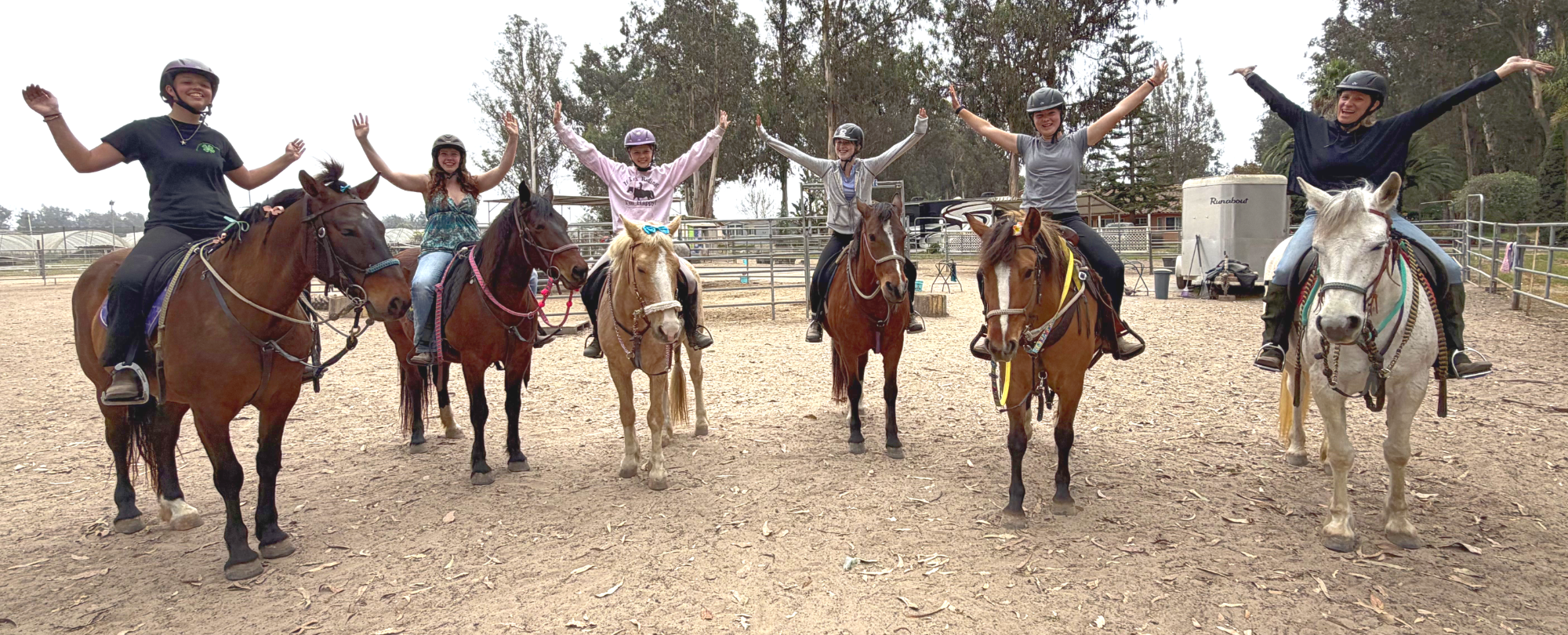
The horses at United Mustangs of America are here every day, long before a clinic or student session begins. They eat, need hoof care, supplements, veterinary and dental care, equipment, clean living spaces, and a place to call home.
Student and event registration pays for education and participation. Community support helps carry the herd that makes that education possible.
If you’d like to support UMA beyond attending the clinic, you can help provide the everyday care and infrastructure that keeps this living classroom here.