

“I Was Told I Should Lease a Horse.”

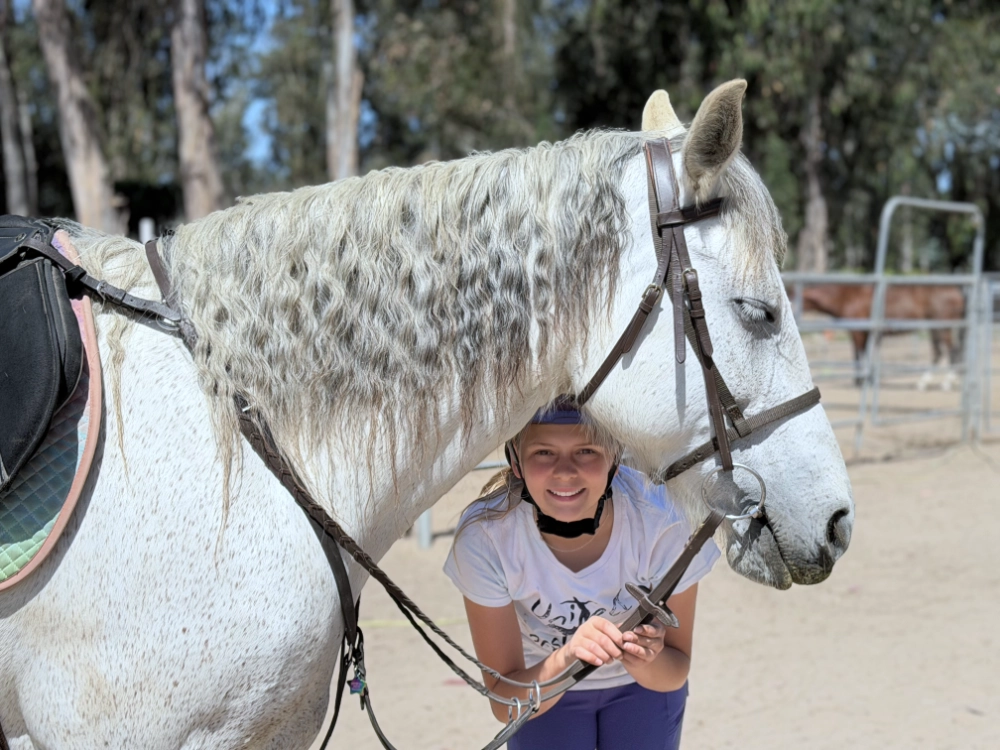
It’s advice that comes up pretty quickly when someone is getting serious about learning horses. Riding lessons are a natural place to begin, but before long there’s often a desire for more time and more experience than a lesson alone can provide.
How do you learn to catch and lead a horse safely, groom and tack up, understand what the horse is communicating, and become comfortable with everyday horse care? How do you get enough regular time around horses for all of those individual lessons to start coming together into real experience?
For a parent looking for that experience for a child, an adult beginning later in life, or even a parent and child who want to learn together, the same suggestion often comes up:
“You should lease a horse.”
And it makes sense why. What you’re really looking for is more access and more time with horses, not simply another hour in the saddle.
But a horse lease is more than access.
A lease is an agreement with an owner for the use of a particular horse. Depending on the individual lease agreement, it can also involve responsibilities or decisions around expenses, farrier and veterinary care, insurance, permitted use, what happens if the horse becomes injured, and when or how the lease can be ended.
There’s nothing inherently wrong with that arrangement. Leasing can be a wonderful next step for the right person at the right time.
But what if the thing you need right now isn’t a horse to lease?
What if what you’re really looking for is enough time with horses to learn them, while still having a coach helping you develop the skills to use that time well?
That’s the space I created Horse Lab to fill.
Horse Lab isn’t a horse lease
Horse Lab isn’t a lease under another name. Students aren’t assigned one of my horses and asked to take on the responsibilities that can accompany leasing that particular horse.
Instead, Horse Lab combines ongoing coached lessons with additional practice time at United Mustangs of America.
The coaching part matters because I don’t expect someone to become independent simply because I give them more time with a horse. During our coached sessions, we keep learning. We may be working on riding, groundwork, handling, horse care, communication, problem solving, or whatever the horse and student are showing us needs attention.
Then Horse Lab gives the student something that can be surprisingly difficult to get when learning horses: enough time to actually practice.
A skill can make perfect sense while I’m standing there coaching it. Something different begins happening when the student has enough understanding to try it again, observe what happens, make decisions, work through what they already know, and then bring those experiences back into our next coached session.
The lesson feeds the practice, and the practice feeds the next lesson.
That’s how independence begins to develop.
And you aren’t learning with only one horse
UMA has a herd of eight horses, and Horse Lab isn’t built around attaching a student to one designated lease horse.
As students develop their skills, they can be approved to work with different members of the herd.
One horse may respond beautifully to something another horse barely notices. One may ask for more clarity. Another may require less energy. Something that worked yesterday may need to change today, simply because today there is a different horse standing in front of you.
Learning with one familiar horse can teach someone an enormous amount about that individual horse. Learning across a herd begins asking a larger question:
“Can I understand and adapt to the horse that is actually in front of me?”
That’s a very different education.
What do you actually get with Horse Lab?
Horse Lab combines four 2-hour coached sessions each month with up to 16 additional hours of Horse Lab practice time once a student has demonstrated the skills and independence required to participate safely.
When all of that time is being used, horses can become part of life roughly three times a week rather than something that happens only during a weekly lesson.
What does that actually look like in a month?
Each coached session is two hours long.
Four coached sessions provide:
8 hours of coached learning each month
Horse Lab adds up to eight additional 2-hour practice sessions:
16 hours of Horse Lab practice
Together, that can provide:
12 visits + up to 24 hours with horses each month
Across a typical four-week month, that works out to roughly three horse days each week:
1 coached session + 2 Horse Lab practice sessions
Horse Lab practice is for skills the student has already learned and with horses they have been approved to work with. Students continue receiving their four coached sessions every month as their skills and independence develop.
Horse Lab participation requires an independence and safety check.
It also lets you practice something bigger
Somewhere in all of those hours, something else starts happening.
Horses begin taking up a real place in your life.
There is horse time on the calendar this week, next week, and the week after that. There is a financial commitment to maintain. There are days when going to the horses is exactly what you want to do and other days when fitting horses into an already busy life takes some effort.
Without actually leasing or owning a horse, you begin getting answers to questions that are difficult to answer from the outside.
Does this amount of horse time fit into our lives? Can we maintain the financial commitment month after month? Are we actually showing up consistently? Are our skills developing? Can we increasingly make good decisions without someone standing beside us directing every move?
In that sense, I think of Horse Lab as a form of practice ownership.
There is one enormous difference: the horses are still my responsibility.
The student gets to practice making horses a meaningful and consistent part of life while UMA continues carrying the ultimate responsibility for the horses themselves. You can experience the commitment without entering into a lease for a particular horse before you know whether that commitment really fits.
If someone successfully maintains Horse Lab over time, that tells them something useful. The time commitment is working. They’ve been able to budget for horses consistently. Their skills have had time to develop. They’re gaining experience with different horses, and horses have found a sustainable place in their actual life rather than only the life they imagine having someday.
The discovery can go the other direction too.
Someone can love horses deeply and discover that they don’t actually want the full time, expense, or responsibility of leasing or owning one. That doesn’t mean horses have to disappear from their life. It means they learned something valuable before a horse became dependent upon them.
A lease may eventually be exactly the right next step. Ownership may be too.
Horse Lab isn’t designed to keep someone from either one. It’s a place to learn enough, practice enough, and live with the commitment long enough to make those decisions from experience.
Start with the horses
Nobody has to know on the first day whether Horse Lab, leasing, or eventually owning a horse is where this will lead.
We start with the horses.
The Start Here Session is a two-hour introduction to United Mustangs of America where we can meet, begin working together, and see where you or your child is starting from. From there, we can begin building the skills that lead toward lessons, greater independence, and eventually Horse Lab when you’re ready.
United Mustangs of America
Arroyo Grande, California